How to Join
MESSAGE
Understand how metals deform. Create the future of manufacturing.
In the Furushima Laboratory, we study why metallic materials deform the way they do at the microstructural level and connect that understanding to the design of advanced manufacturing processes.
Our research covers heterogeneous deformation, surface roughening, ductile fracture, recrystallization and texture, microforming, dieless forming, numerical modeling, and process design.
Experiment×Modeling×Process Design
WHAT YOU CAN EXPERIENCE
What you can do in our laboratory
Work with experiments
and numerical modeling
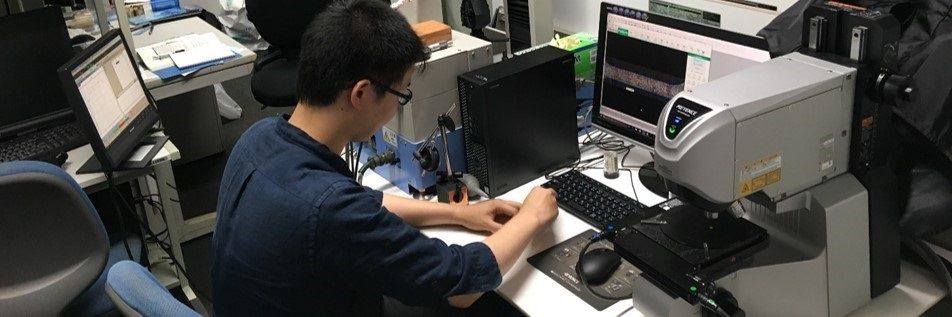
We combine mechanical testing and microstructural characterization such as EBSD and DIC with FEM and crystal-plasticity simulations. We do not stop at obtaining results: we ask why the observed behavior occurs.
Build your own research
Depending on the project, you may design experimental fixtures or apparatus, develop analysis codes, and propose new ways to test a hypothesis. Our goal is not simply to complete assigned tasks, but to learn how to solve an open research problem.
Connect fundamentals
to manufacturing
Some projects focus on deformation mechanisms at the grain scale, while others develop new forming processes and manufacturing methods. Moving between fundamental science and engineering application is one of our laboratory's strengths.
Communicate your research
to the world
We encourage students to present their work at international conferences and publish in peer-reviewed international journals. Master's students are encouraged to aim for research of publishable quality.
WHAT YOU WILL LEARN
What we hope you will develop through research
We hope students develop not only technical skills, but also the ability to identify a problem, formulate a hypothesis, test it, and explain the result.
- QuestionIdentify the real problem
- HypothesisFormulate a testable idea
- DesignPlan experiments and simulations
- ReasoningExplain results logically
- CommunicationPresent your work clearly
Research rarely has a known answer. When results differ from expectations, you need to think about why and decide what to do next. That process is a major part of graduate education.
RESEARCH STYLE
How we work
Graduate research is a central part of graduate-school life
In principle, students use the laboratory as their research base on weekdays and communicate regularly with faculty members and other laboratory members.
Our standard research hours are approximately 9:30–17:30. Students are expected to plan their work, review progress, and discuss problems when needed.
Our aim is not to prescribe every next step. Through discussion, we expect students gradually to become able to decide for themselves what should be done next.
WHO WE WELCOME
Who we are looking for
You do not need to be an expert in metal forming or plasticity before joining us. Curiosity, persistence, and a willingness to think independently are more important.
- You enjoy asking “why?”
- You want to try both experiments and computation
- You are interested in building apparatus or writing code
- You can work patiently on difficult problems
- You want to present your research internationally
FOR PROSPECTIVE STUDENTS
Admission routes
There is more than one way to join our laboratory. The appropriate route depends on whether you are seeking a degree, your eligibility, and your preferred enrollment period. Please check the latest official guidelines before applying.
Regular Admission
Master's / Doctoral degree
The standard entrance-examination route for the Department of Mechanical Engineering, Graduate School of Engineering.
- Degree route for Master's and Doctoral applicants
- Selection procedures are specified each academic year
- Depending on the program, selection may include written examinations, document review, and oral examinations
- The Master's program also has a Special Oral Selection for eligible applicants
- For Doctoral applicants, multiple examination schedules may be available; check the current admissions guide
Typical choice: applicants who will take the standard Department of Mechanical Engineering entrance examination.
Mechanical Engineering admissions →IME Graduate Program
Master's / Doctoral degree
The International Multidisciplinary Engineering (IME) Graduate Program is an international admission pathway leading directly to a Master's or Doctoral degree.
- Research guidance and lectures are available in English
- Applicants can complete the selection process without taking the regular entrance examination in Japan
- Selection is based on application documents and online examinations/interviews as required
- For Mechanical Engineering, application opportunities may include both April and October enrollment
- A prospective supervisor should be identified and contacted during the application process
Typical choice: eligible international applicants seeking an English-based application route from overseas.
IME Graduate Program →Postgraduate International Research Student
Non-degree status
International applicants may also join the Graduate School of Engineering as a Postgraduate International Research Student.
- This is a non-degree program
- You conduct a specific research project under a faculty supervisor
- Selection is based on application documents rather than the regular entrance examination
- Enrollment may be available in April or October
- Research-student status does not itself confer a Master's or Doctoral degree
Typical choice: applicants who want a non-degree period of research in the laboratory.
International Research Student information →BEFORE YOU APPLY
Please contact us before preparing your application
Read the research page and identify topics close to your interests.
Tell us your background, research interests, desired status, and preferred start period.
We discuss possible topics, supervision, and which route may be appropriate.
Follow the latest University, fellowship, or program-specific guidelines.
CONTACT
Interested in joining us?
When contacting us, it is helpful to include your current university or institution, academic background, research interests, desired status (Master's / Doctoral / Research Student / Postdoc / Researcher), and preferred starting period.
tsuyoful★iis.u-tokyo.ac.jp
Please replace ★ with @.